



By Ken Jones, Owner at Flamingo Custom Carts
Published
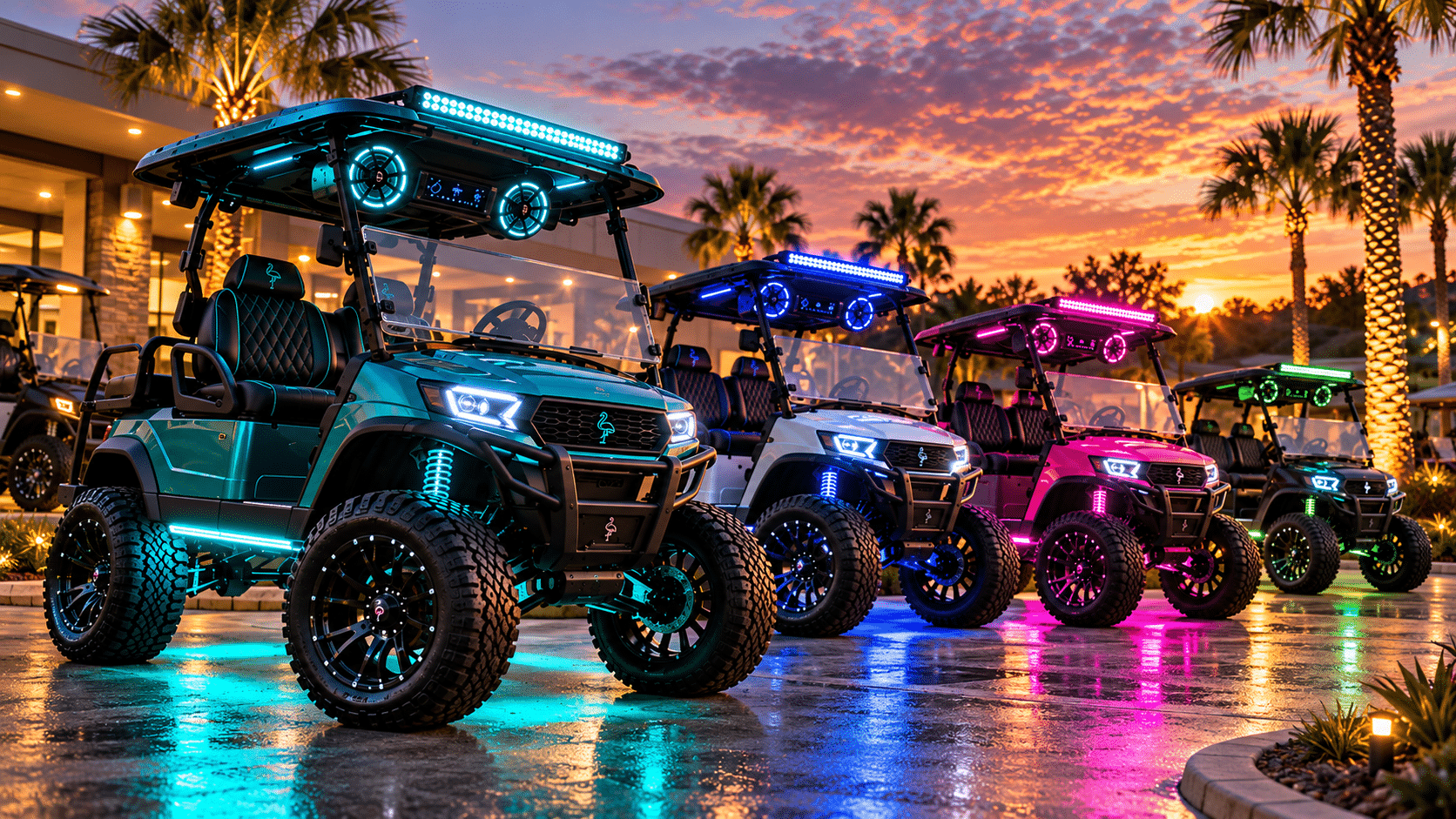
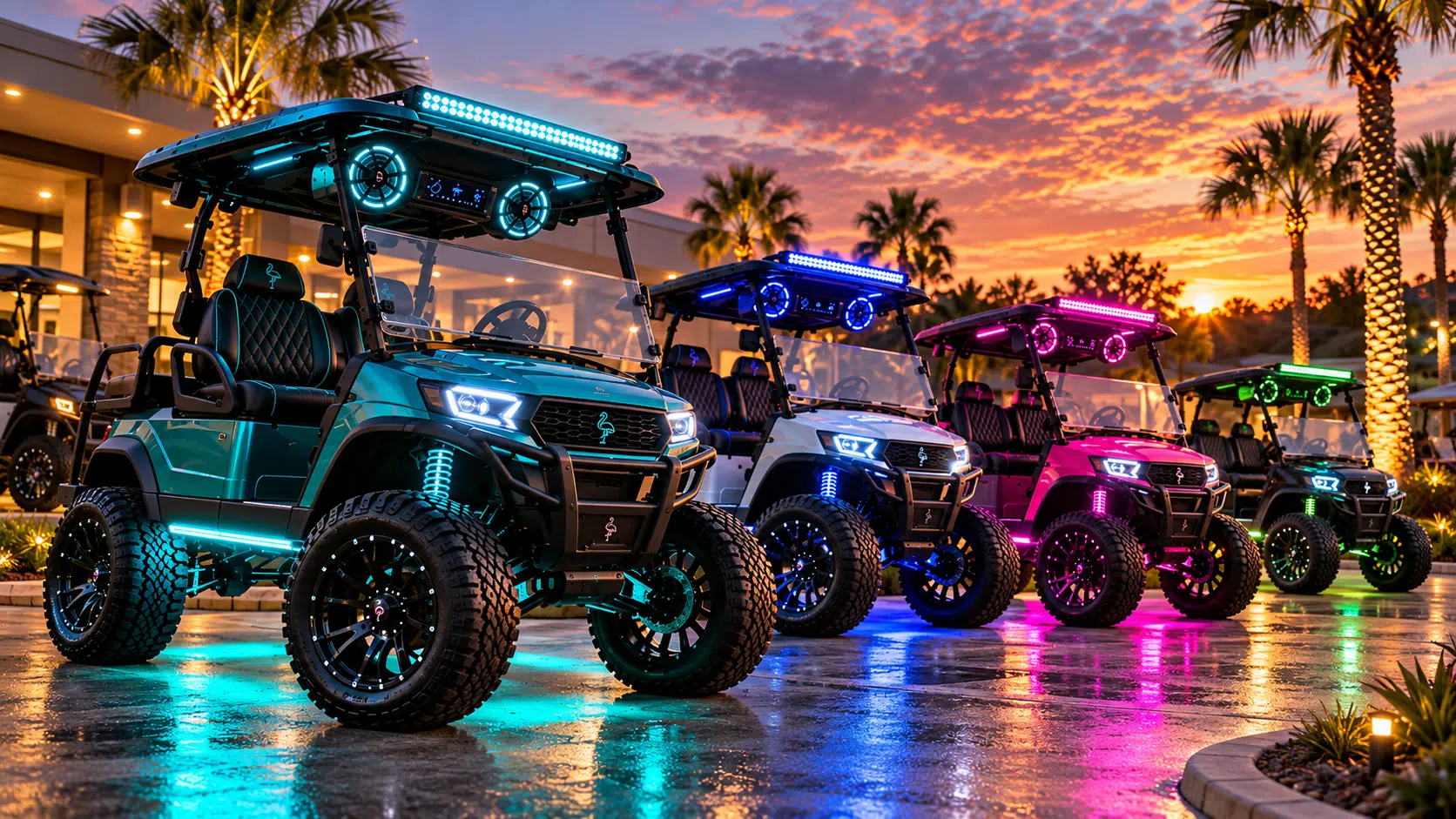
A good golf cart LED lighting setup starts with the job each light does. Headlights and taillights help you see and be seen, light bars throw extra light down a dark path or trail, and accent and rock lights add style plus a little ground-level visibility. Choose lights by brightness (lumens), beam pattern and weather rating, power them through a fused circuit at the right voltage, and check your city or county rules before you drive on a public road.
Below, we break down each type of light, explain the specs that actually matter, and walk through the wiring questions to answer before anything gets connected to your battery pack.

The Four Main Types of Golf Cart LED Lights
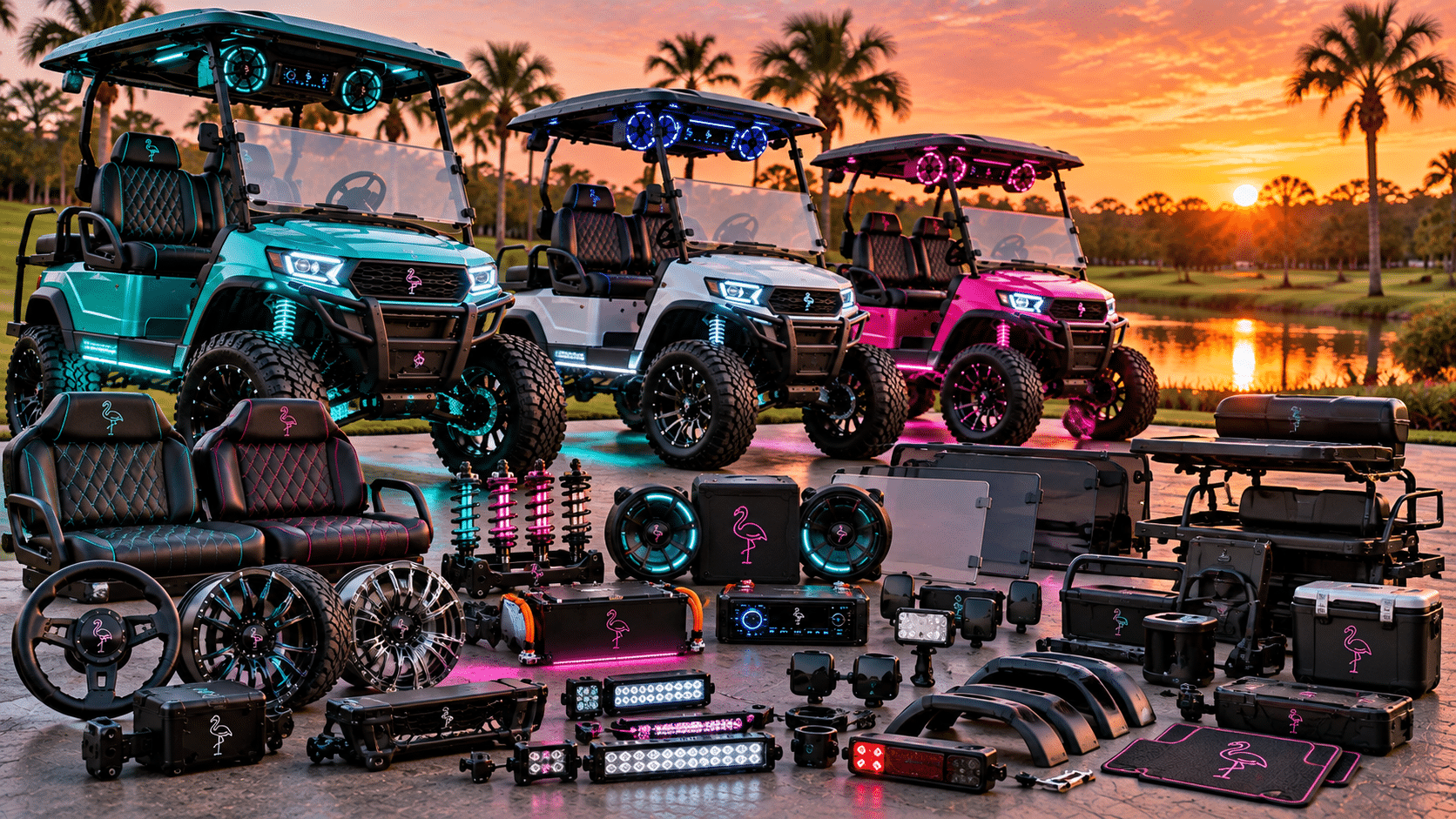
Most lighting packages are built from the same four pieces. Knowing what each one is for keeps you from buying a bright light that does the wrong job.
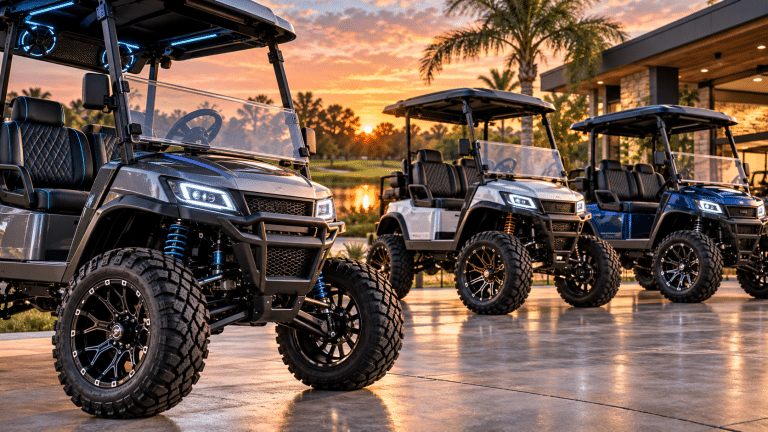
- Headlights: Your main forward light for seeing the path ahead after sunset. On most carts they mount in the front cowl or bumper area.
- Taillights and brake lights: Rear lights that let drivers and walkers behind you see where you are and when you are slowing down. Many kits pair them with turn signals.
- Light bars: Extra-output lights, usually mounted on the roof or front bumper, for trails, farms, job sites and big properties. They are more than you need for a short neighborhood loop.
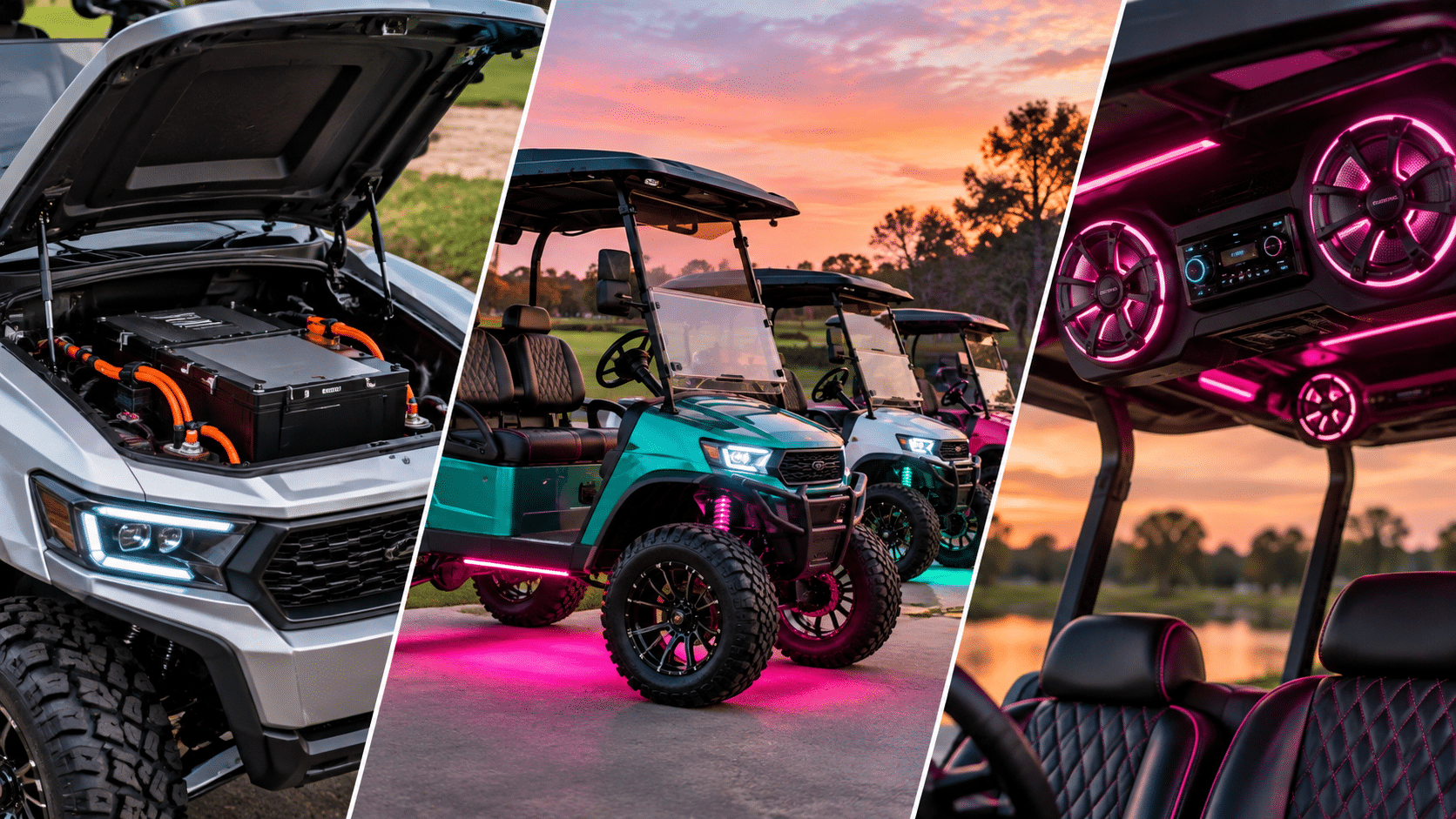
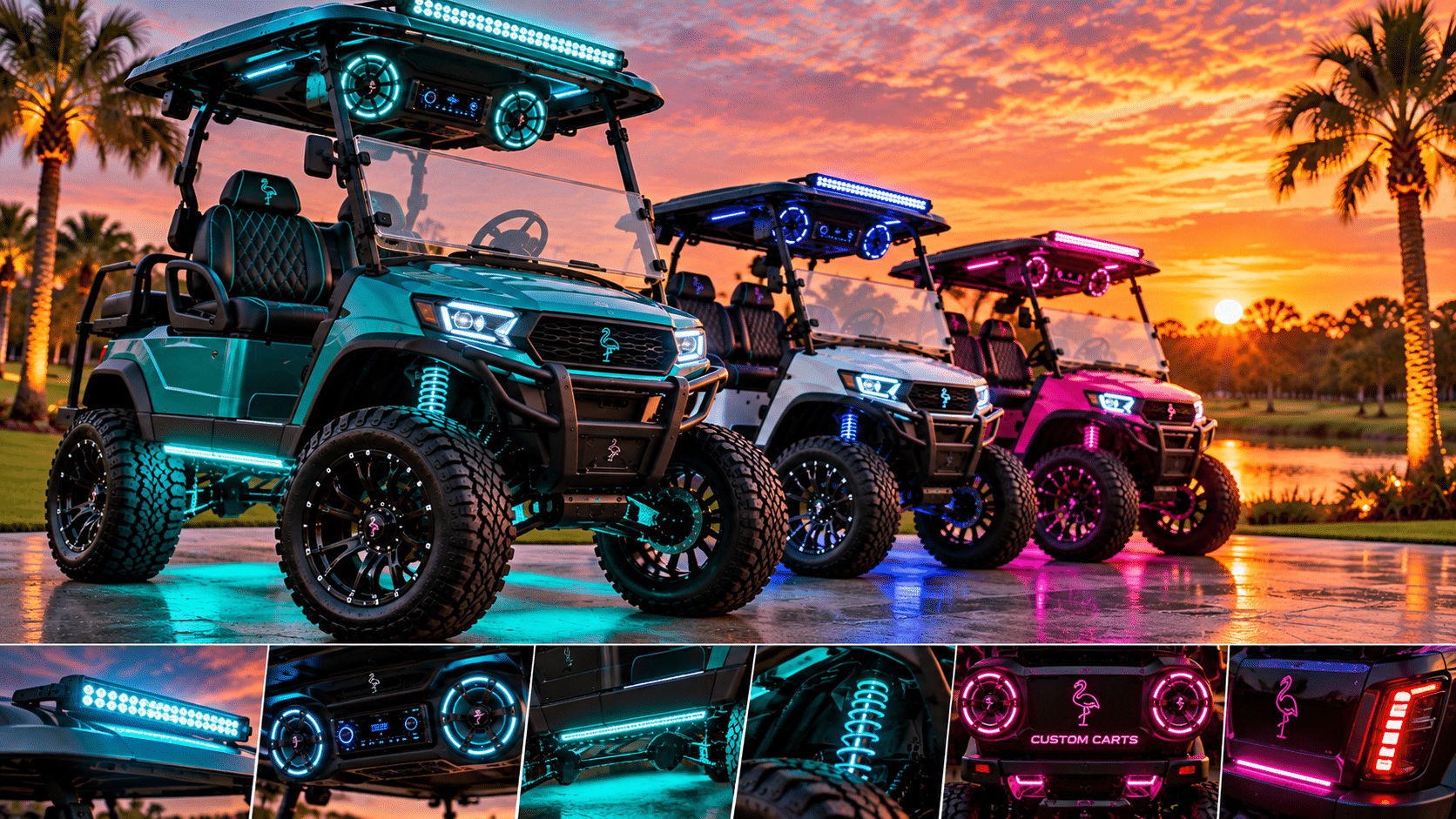
- Accent, rock and underglow lights: Low-mounted pods or strips around the wheels, steps, rocker panels or under the body. They add personality and light up the ground where you step in and out.
Brightness Basics: Look at Lumens, Not Watts
The same rule used for household bulbs applies to cart lights. ENERGY STAR’s light bulb purchasing guide puts it simply: “For brightness, look for lumens, not watts.” Watts tell you how much power a light uses. Lumens tell you how much light it puts out. When you compare headlights or light bars, compare lumen ratings from the manufacturer’s spec sheet, and be cautious with listings that only advertise watts.
Color temperature is the other number on the box. ENERGY STAR explains that “lower K means warmer, yellowish light, while higher K means cooler, bluer light.” Warmer light can feel softer around the house, while cooler white light looks crisp and modern. Neither is automatically better; it comes down to how you use the cart and the look you want.
- More lumens are not always better. Very bright lights aimed too high can glare into the eyes of drivers, walkers and neighbors.
- Aim headlights slightly down toward the path, not straight out at eye level.
- Keep accent and rock lights soft enough that they add style without distracting anyone around you.
Beam Patterns: Spot, Flood and Combo
Beam angle describes how wide a light spreads. According to Super Bright LEDs, “Spotlights generally have beam angles up to 45 degrees,” while “any light with a beam angle of around 45 degrees and above is usually considered a flood light.” Combo light bars mix both in one housing.
- Spot: A tighter beam that reaches farther down a straight path or trail.
- Flood: A wide spread that lights up the area around the cart, such as a campsite, work area or yard.
- Combo: Spot sections for distance plus flood sections for width. Popular for carts that see real off-road time.
For neighborhood cruising, a quality set of headlights with a controlled beam usually makes more sense than a large off-road bar. Save the big bar for property, hunting and trail use.
Weather Ratings: What IP67 and IP68 Mean
Carts get rained on, splashed and hosed off, so weather sealing matters. IP (Ingress Protection) ratings come from the IEC 60529 standard. As Control.com explains, the first digit covers dust and solids and the second covers water. A 6 in the first spot means dust-tight. In the second spot, 7 means protection against temporary immersion (up to 1 meter for 30 minutes), and 8 means protection for continuous immersion beyond that.
A rating on the light itself is only half the story. Connectors, splices and controllers need to be sealed too, or water will find the weakest point in the circuit.
Wiring and Power Considerations
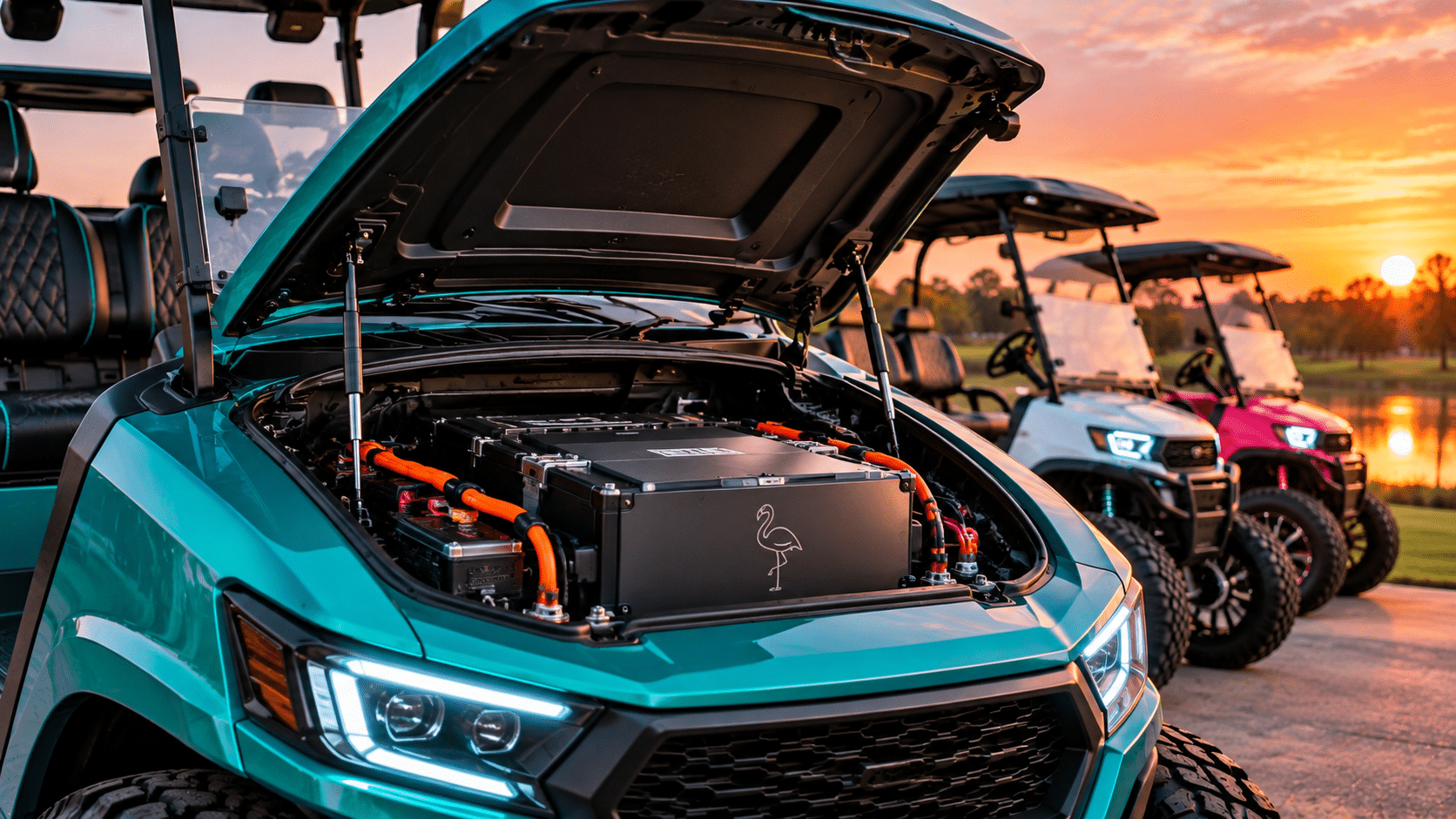
Most golf cart LED kits run on 12 volts, but electric carts usually run a 36-, 48- or 72-volt battery pack. RoyPow’s conversion guide notes that a pack at those voltages cannot safely power 12-volt accessories directly, which is why lighting kits use a voltage reducer or DC-DC converter. Epoch Batteries warns on its 48V-to-12V reducer page that wiring 12-volt accessories straight to a 48-volt battery can cause damage because “the overvoltage can instantly damage the equipment.”
Installation instructions for a Reliance voltage reducer sold by Buggies Unlimited show the basic safety steps: turn the cart off, put the RUN/TOW switch in TOW if your cart has one, and disconnect the main battery negative cable before you start. The same instructions say the light kit’s positive wire has an inline fuse, and they warn to mount the reducer on metal because “the reducer gets hot and can potentially melt plastic.”
- Match the voltage. Confirm the light kit’s input voltage and the output of the reducer or converter feeding it.
- Fuse every positive feed. Blue Sea Systems advises in its circuit protection guide to “always select a fuse size to protect the wire according to its rating.”
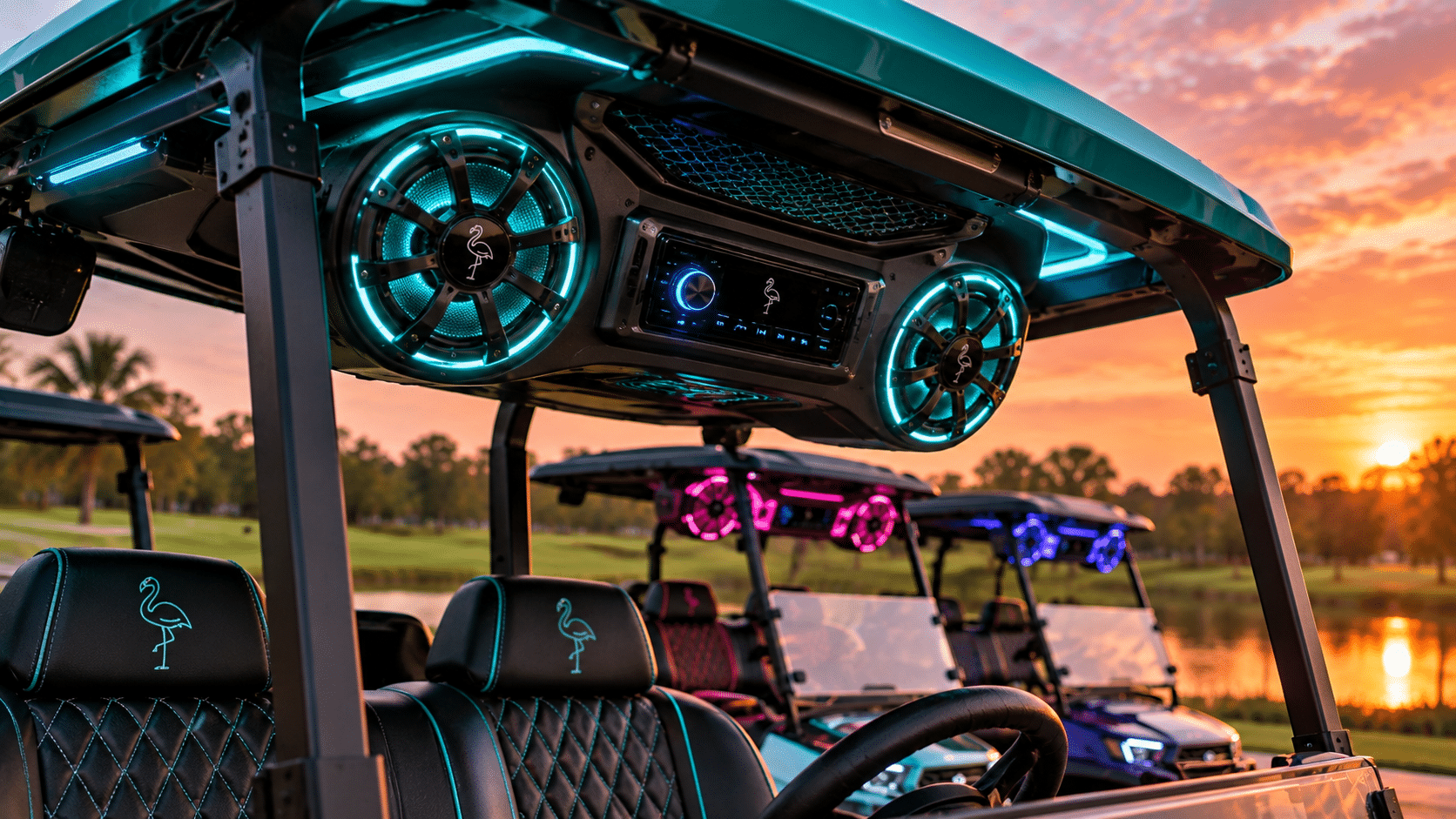
- Size the converter for the total load. Headlights, taillights, accents and a sound system all share the same converter. Add up the amps before you add more lights.
- Do not tap a single battery. Epoch notes that tapping one 12-volt battery in a series pack “causes imbalance and is not possible with a single 48V lithium pack.”
- Route wires carefully. Keep wiring away from steering, suspension and moving parts, protect it from sharp edges, and secure it with ties so nothing hangs low.
Gas carts and electric carts are wired differently, and even two electric carts from different years can vary. Check your owner’s manual, or have the cart looked at before you buy parts.
Road Use: Check Your City or County Rules First
In Georgia, local governments decide whether and where golf carts can use public streets. When the state’s golf cart law passed, GPB reported that it required “braking systems, a reverse warning device, tail lamps, a horn and hip restraints” and set standards for towns and counties that want to create ordinances. That report is from 2011, so confirm the current rules.
Local ordinances can ask for more. The City of Conyers golf cart guide, for example, lists “head lamps and tail lamps activated at all times,” front and rear turn signals, a horn and a rearview mirror for carts on city streets. Closer to home, Atlanta News First reported in December 2024 that the Marietta City Council had only opened discussions about allowing carts in parts of the city. Rules change, so check your city, county and HOA before you drive on any public road.
Golf Cart Lighting Checklist
- Decide where you ride after dark: streets, paths, trails or private property.
- Look up your city or county golf cart ordinance and any HOA rules.
- Compare lumen ratings, beam patterns and IP ratings from manufacturer spec sheets.
- Confirm the kit’s input voltage and your cart’s pack voltage.
- Plan a converter with enough capacity for every 12-volt accessory, not just the lights.
- Fuse each positive feed and use sealed connectors.
- Disconnect the main battery negative (and switch to TOW if equipped) before any wiring.
- Aim headlights down and test everything before your first night ride.
FAQ
Are LED golf cart lights brighter than halogen?
Not automatically. Brightness depends on the specific light, so compare lumen ratings rather than assuming LED or halogen wins. Beam pattern and aim also change how bright a light looks on the path.
Do I need a voltage reducer for golf cart LED lights?
If your lights are 12-volt and your electric cart runs a 36-, 48- or 72-volt pack, yes. A reducer or DC-DC converter steps the pack voltage down so the lights are not damaged.
Are headlights required on golf carts in Georgia?
It depends on where you drive. Some cities, such as Conyers, require head lamps and tail lamps on carts using city streets. Check your local ordinance for current requirements.
Will LED lights drain my golf cart battery?
Every light adds some load. How much depends on the wattage of each light and how many hours you run them. A simple power budget, adding up the watts or amps of each accessory, tells you whether your setup has room for more.
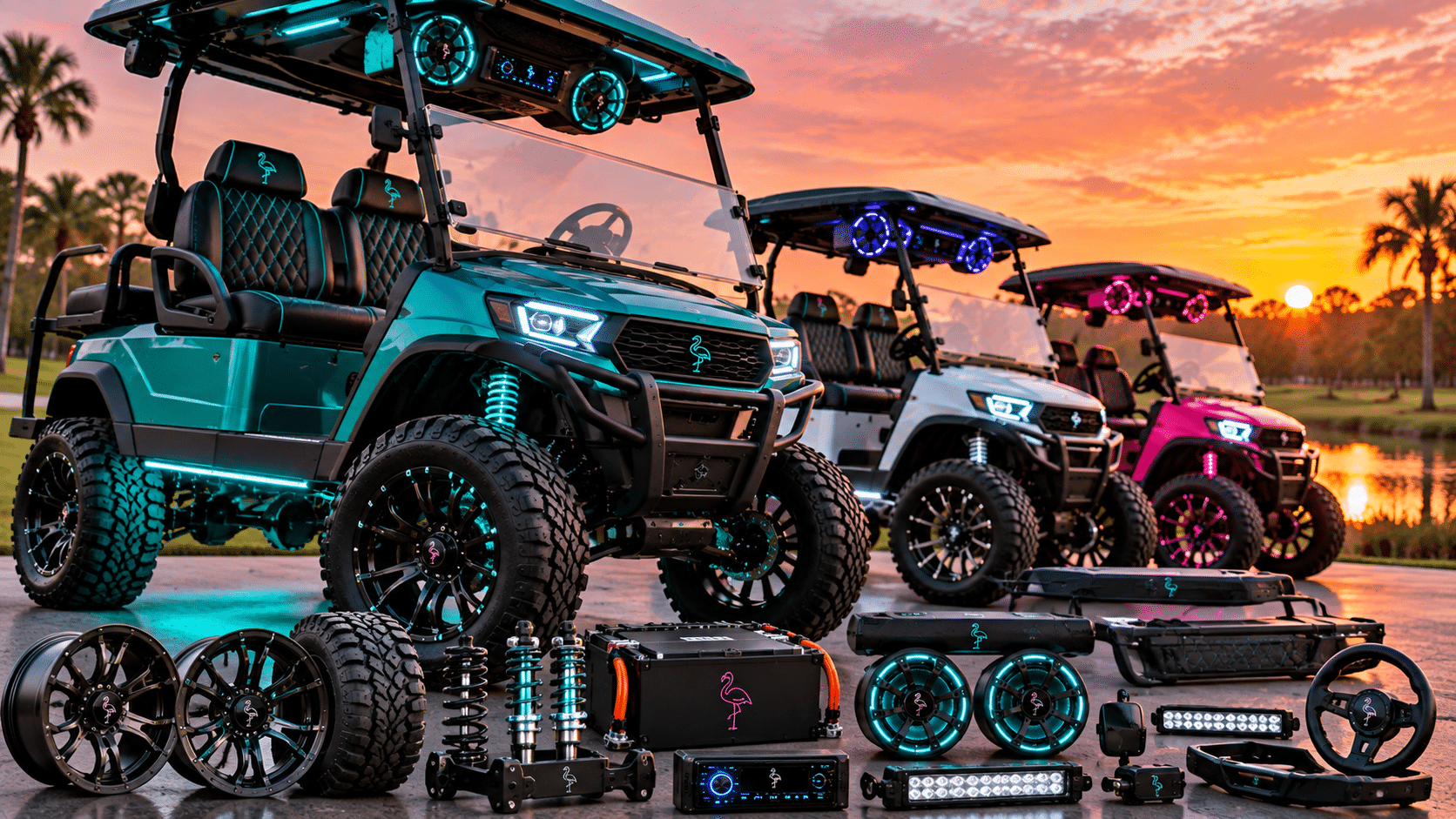
Ready to light up your cart the right way? Flamingo Custom Carts plans and installs custom lighting, including LED headlights, underglow, rock lights and accents, and we stock parts and accessories to finish the job. Call (678) 436-2282, email [email protected], or stop by 1680 Lower Roswell Rd, Suite 100, Marietta, GA 30068, Monday through Friday from 7:00 AM to 3:00 PM. You can also send us a message to start planning your build.