






By Ken Jones, Owner at Flamingo Custom Carts
Published Updated
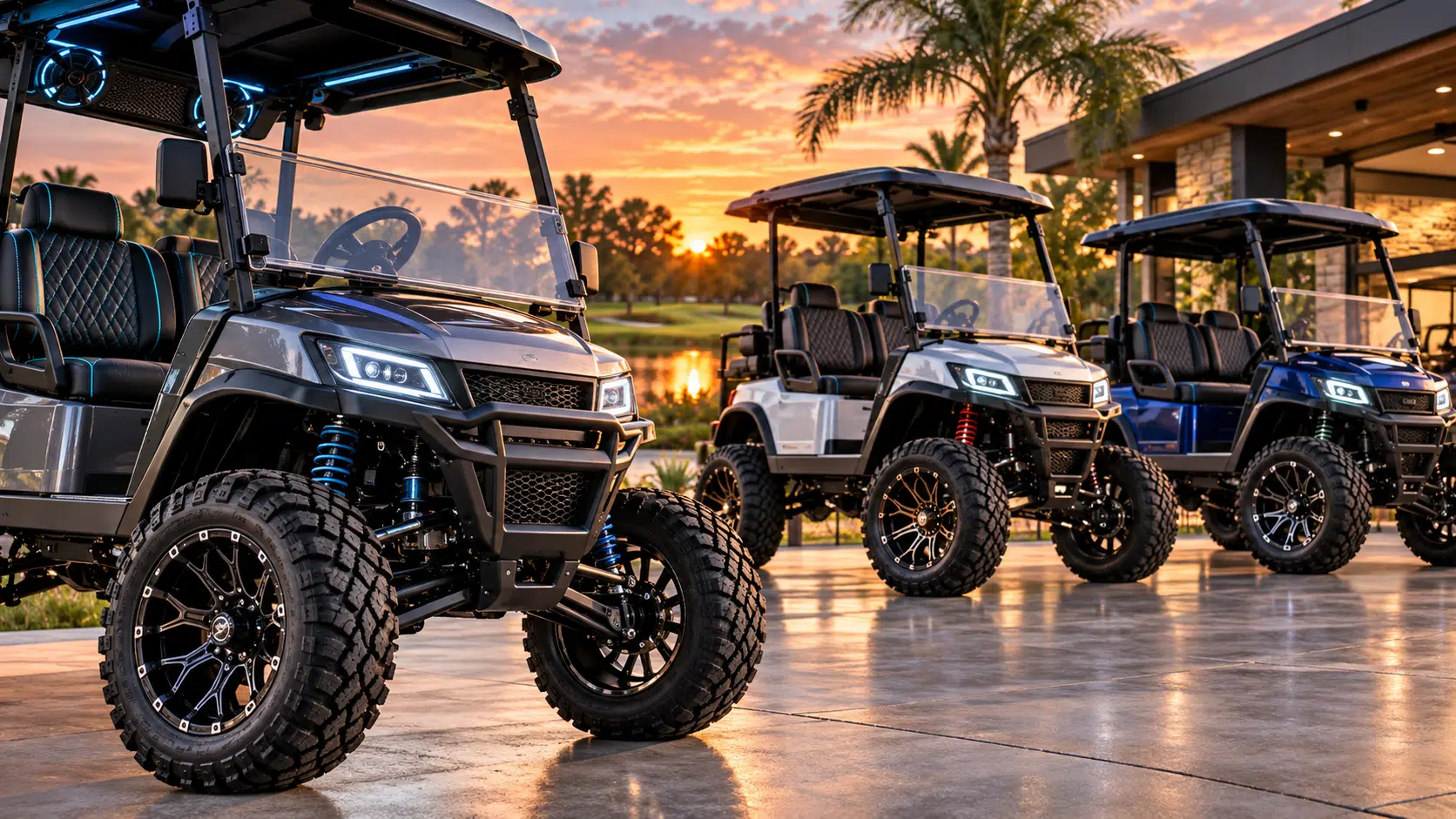
A golf cart lift kit raises your cart’s frame and body higher off the ground so it can clear rougher terrain and fit larger tires. It changes more than the look: ground clearance, stance, ride feel and the center of gravity all shift, and the steering, brakes and alignment deserve a check afterward.
This guide walks through what a lift does, the main kit designs, what else changes with the cart, and seven questions worth asking before anyone picks up a wrench.
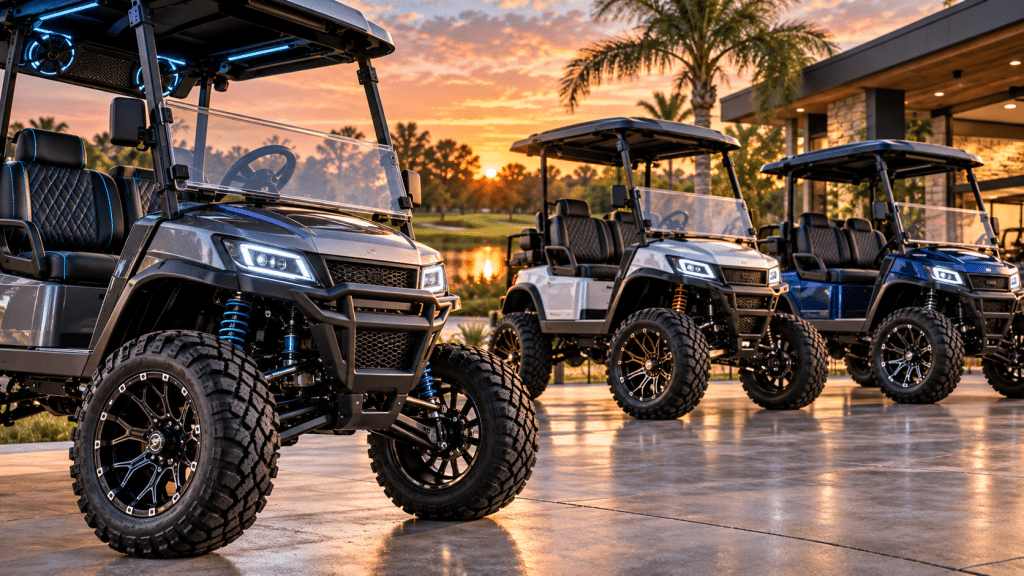
What a Golf Cart Lift Kit Actually Changes
A lift is a suspension and geometry change, not just a cosmetic one. When you raise a cart, almost every part of how it sits and moves is affected in some way. Here are the five changes most owners notice first.
- Ground clearance. The frame, axles and underbody sit higher, so roots, curbs, ruts and gravel paths are less likely to scrape the bottom of the cart.
- Tire size. The extra room in the wheel wells lets you run taller, wider tires that would rub or not fit on a stock-height cart.
- Stance. The cart sits taller and looks more aggressive, especially once bigger wheels and tires go on.
- Ride feel. Depending on the kit and tires, the ride can feel firmer or softer, and taller tires with more sidewall can soak up small bumps differently.
- Center of gravity. Raising the body moves weight higher, which can increase body roll in turns. A lifted golf cart should be driven with more care on slopes and sharp corners.
None of these changes is good or bad by itself. The right amount of lift depends on where you drive, who rides with you, and what tires you want to run.
The Main Types of Lift Kits
Every golf cart lift kit is designed for specific makes, models and model years, so the first rule is fitment. Beyond that, most kits fall into two broad families. Descriptions here are general, and each kit maker’s instructions are the final word on how a given kit works.
Spindle and Drop-Axle Kits
These kits raise the front of the cart by changing where the wheel mounts relative to the axle, either with taller replacement spindles or a replacement front axle. The rear is usually raised with blocks or spacers on the leaf springs. The stock style of suspension stays largely the same, so the ride tends to feel similar to the original, just taller.
A-Arm and Long-Travel Kits
These kits replace parts of the front suspension with new control arms. Long-travel designs are built to let the wheels move up and down farther, which can help the cart stay composed over uneven ground. They usually involve more parts and more installation work than a spindle-style kit.
Which family fits your cart depends on your model, the lift height you want, and how you plan to use the cart. Our wheels and lift kits page covers how we approach these builds.
What Else Changes When You Lift
A golf cart lift kit rarely happens alone. Raising the cart sets off a chain of related changes, and planning for them up front keeps the build safe and avoids surprises.
Think of the lift as the start of a package. The kit, tires, wheels, alignment and a final safety check work together, and skipping one piece can undo the benefits of the others.
Larger Tires and Wheels
Most owners lift so they can run larger golf cart tires. Taller tires add to the visible lift, but they also need room to turn without rubbing. Before you choose a size, ask us to walk you through what the numbers on the sidewall, like 22×10-14, mean for your cart, or browse our parts and accessories.
Alignment
Changing suspension parts and ride height can change how the front wheels point. After a lift, the alignment should be checked and adjusted so the cart tracks straight and the tires wear evenly.
Brakes and Steering
Bigger, heavier tires take more effort to stop and steer. After a lift, it makes sense to confirm that the brakes are in good shape, steering components are tight, and nothing binds or rubs when the wheels turn lock to lock.
Speed Readings and Top Speed
A taller tire covers more ground with each turn. That means a speed display calibrated for stock tires can read lower than your actual speed, and top speed may change. Speed matters legally, too: the Georgia Department of Public Safety’s page on Georgia low-speed vehicle code describes a personal transportation vehicle as capable of a maximum level ground speed of less than 20 miles per hour.
Follow-Up Checks
After the first few rides on a new golf cart lift kit, listen for new noises, watch for tires rubbing at full steering lock, and look for uneven tire wear over time. Follow the kit maker’s instructions for any re-torque or follow-up inspection they call for.

7 Helpful Questions to Ask Before You Lift
Use these seven questions to plan a lifted golf cart that fits how you actually drive. Bring the answers with you when you talk to an installer.
1. How Will You Use the Cart?
Neighborhood cruising, farm chores, trail use and hunting land all call for different setups. Be honest about how much rough ground you really cover, because more lift is not automatically better.
2. How Much Lift Do You Actually Need?
Start with the tire size you want and the clearance you need, then pick the golf cart lift kit that supports both. A smaller lift keeps the center of gravity lower, which helps stability on slopes and turns.
3. Is the Kit Made for Your Exact Cart?
Golf cart suspension designs differ by brand, model and year. Confirm the kit is listed for your exact cart, and keep your model and serial information handy when you shop.
4. What Wheels and Tires Will Go With It?
The kit and the tires should be planned together. Ask what tire diameter the kit is designed to clear, and whether you will need different wheels to get the look and offset you want.
5. Will Steering, Brakes and Alignment Be Checked?
A good install does not end when the cart is back on the ground. Ask whether the alignment will be set, steering parts checked for play, and the brakes inspected for the added tire size.
6. Will You Drive on Public Roads?
If you want to use the cart on public streets, rules depend on how the vehicle is classified and where you drive. Federal standard 49 CFR 571.500 lists equipment a low-speed vehicle must have, including headlamps, turn signals, stop lamps, mirrors, a parking brake, a windshield, a VIN and seat belts. Georgia law also lets local governments decide which streets carts may use. Check with your city or county; this is general information, not legal advice.
7. Who Will Install It?
A golf cart lift kit involves suspension, steering and brake components, so installation quality matters. Choose a shop that works on these systems regularly and will explain what they changed and what to watch for afterward.

Frequently Asked Questions
Does a golf cart lift kit make the cart less stable?
Raising the body moves the center of gravity higher, which can increase body roll. Choosing only the lift you need, keeping tire pressures where the manufacturer recommends, and taking turns and slopes slower all help.
Do I need bigger tires after installing a golf cart lift kit?
You do not have to, but most owners lift so they can fit larger tires. The kit maker’s fitment notes tell you what tire diameter it is designed to clear.
Will a lifted golf cart ride differently?
Usually, yes. Spindle-style kits tend to feel close to stock, while A-arm and long-travel designs can change how the front end handles bumps. Tire size and pressure also affect ride feel.
Can I make a lifted cart street legal in Georgia?
It depends on the vehicle’s classification, its equipment and local ordinances. Review the official rules linked above and check with your city or county before driving on public roads. This is not legal advice.
Plan Your Golf Cart Lift Kit With Flamingo Custom Carts
Flamingo Custom Carts, the custom build and upgrade shop of Golf Carts Atlanta, handles wheels, lift kits and the custom touches that go with them. Visit us at 1680 Lower Roswell Rd, Suite 100, Marietta, GA 30068, Monday through Friday from 7am to 3pm.
Call (678) 436-2282 or contact us online to talk through the golf cart lift kit, tires and setup that fit the way you drive.