




By Ken Jones, Owner at Flamingo Custom Carts
Published
A golf cart tire size such as 22×10-14 lists three measurements in inches: the overall tire diameter (22), the tire width (10), and the wheel or rim diameter it mounts on (14). Knowing how to read those numbers helps you choose tires that clear your body and lift, keep speed readings sensible, and fit the wheels you want.
Here is how to read the code, why each number matters, and what else to check on the tire sidewall before you buy.
How to Read a Golf Cart Tire Size
Most golf cart tires use a flotation-style size written as three numbers. Using 22×10-14 as the example:
- 22 is the overall diameter, or how tall the mounted, inflated tire stands, in inches.
- 10 is the width of the tire in inches.
- 14 is the rim diameter, meaning the tire mounts on a 14-inch wheel.
Dexter Axle’s glossary of tire terms defines overall diameter as the diameter of the inflated tire at the outermost surface of the tread, and section width as the maximum width of a new tire. Those are the same two dimensions the first two numbers describe.
Metric-Style Sizes
Some golf cart tires use a metric-style code such as 205/50-10. Here, 205 is the width in millimeters, 50 is the aspect ratio (sidewall height as a percentage of width), and 10 is the rim diameter in inches. To compare a metric size with a flotation size, compare overall diameter and width, not just the rim number.
How to Find Your Current Golf Cart Tire Size
Before you shop, find out what is on the cart now. The size is molded into the tire sidewall, usually in raised lettering near the rim. Clean off dirt so you can read it clearly, and check more than one tire, because previous owners sometimes mix sizes.
Your owner’s manual will also list the original golf cart tire size in its specifications section. If the tires on the cart do not match the manual, the cart may already have been modified, and any new tires should be chosen with that in mind.
Write down the full code exactly as printed, including any letters, along with the wheel size and whether the cart has a lift. That information makes it much easier to compare options.
Why Golf Cart Tire Size Matters
Tire size affects much more than looks. Changing the golf cart tire size changes how the cart sits, how it fits, and how it reports speed.
Lifts and Clearance
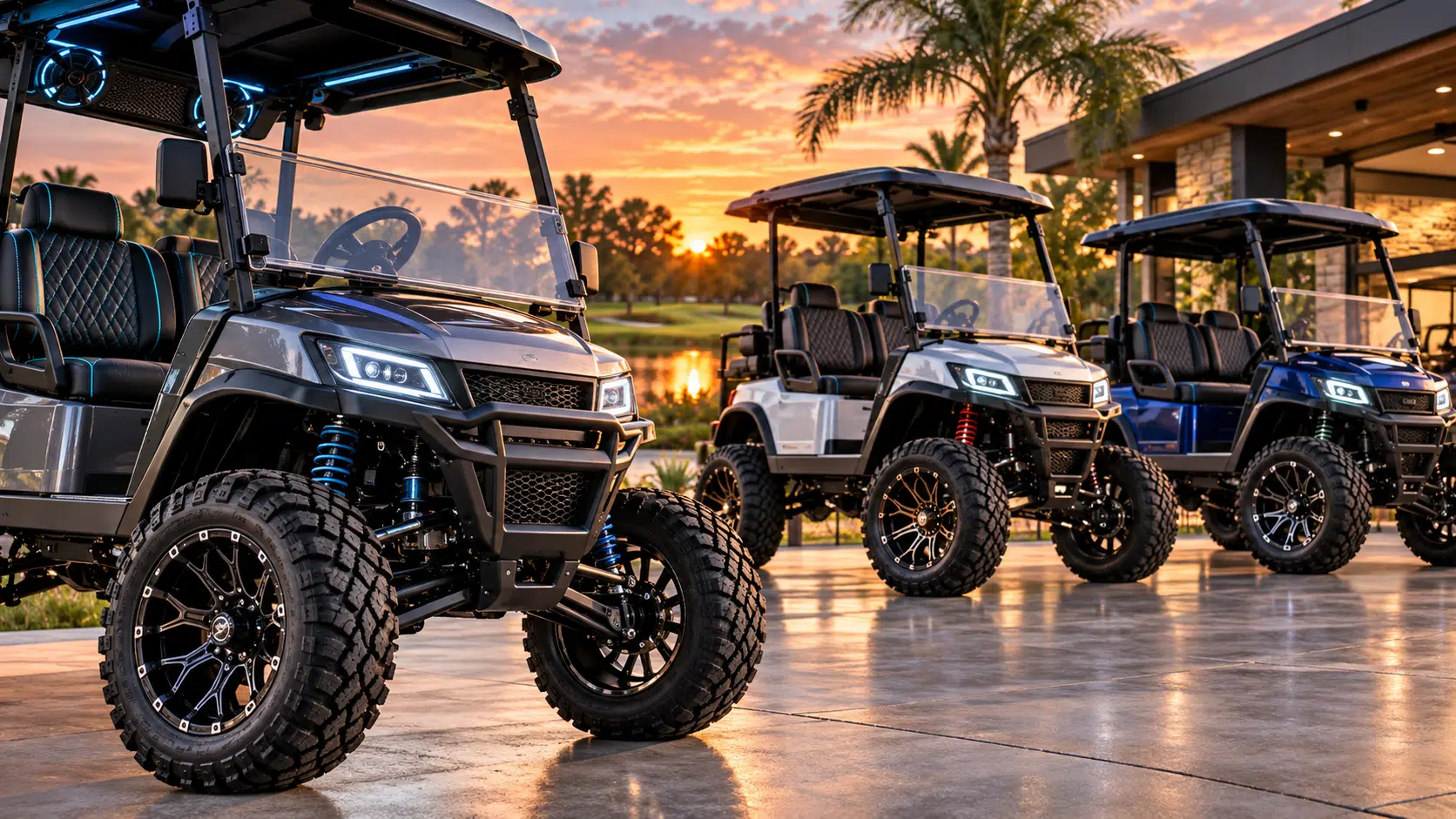
A taller or wider tire needs more room in the wheel well, especially when the front wheels are turned and the suspension compresses. Stock-height carts often have limited room, which is why larger tires usually go hand in hand with a lift. Our golf cart lift kit guide explains how lifts and tire choices work together.
Lift kit makers usually state which tire diameters their kit is designed to clear. Use that as your limit, not just how the tire looks when the cart is parked.
Speed Readings
A tire with a larger overall diameter travels farther with each turn. If your cart has a speed display calibrated for its original tires, it can read lower than your true speed after you switch to taller tires. The reverse is true if you go smaller.
Taller tires can also change how the cart feels when pulling away and climbing hills, because the motor has to turn a larger wheel. If acceleration or hill climbing feels different after a tire change, mention it to your installer so they can look at the whole setup.
Wheel Fit
The last number must match your wheel diameter exactly. A 14-inch tire only fits a 14-inch wheel. If you want a different wheel size, you need tires made for that rim, and the overall diameter still has to fit the cart.

Street Tread vs. All-Terrain Tread
Once you know the size, choose a tread pattern that fits where you drive. Golf cart tires generally fall into two broad styles.
Street and Turf Tires
Street and turf tires generally have a lower, smoother tread designed for pavement, cart paths and lawns. They tend to roll quietly and are gentler on grass, which suits neighborhood and golf course use.
All-Terrain Tires
All-terrain tires generally have deeper, more open tread blocks for grip on dirt, gravel and wet grass. The trade-off is that they can be louder on pavement and may tear up turf more easily. If you split time between pavement and trails, look for a pattern designed for mixed use.
Whichever style you choose, inspect tread depth and look for cracks, bulges or cuts on a regular schedule. Worn or damaged tires reduce grip on wet pavement and grass, no matter how good the tread pattern was when new.
A Simple Process for Choosing a New Size
When you are ready to change the golf cart tire size, work through the decision in order instead of starting with the tire that looks best.
- Decide where you will drive most: pavement, turf, gravel, trails or a mix.
- Choose your wheel diameter and style.
- Confirm the overall diameter and width your cart, or your lift kit, can clear at full steering lock.
- Pick a tread pattern that suits your terrain.
- Check the load rating against how many riders and how much cargo you carry.
- Keep all four tires the same size unless your lift or wheel maker specifies otherwise.
5 Helpful Things to Check on the Tire Sidewall
The size is only one part of the tire sidewall. Before you buy or install new golf cart tires, check these five things.
1. The Size Code
Confirm the golf cart tire size matches the wheel diameter and fits your cart’s clearance. Your owner’s manual or the lift kit instructions are the best guide to what will fit.
2. Ply Rating or Load Range
Many tires show a ply rating or a load range letter. Dexter Axle’s glossary notes that ply rating is an index of tire strength tied to the tire’s maximum recommended load, and it does not necessarily represent the actual number of cord plies in the tire.
3. Maximum Load
The maximum load is the most weight the tire is designed to carry under standard use. If you carry extra riders on a rear seat or haul cargo, make sure the tires you choose can handle the weight.
4. Maximum Inflation Pressure
The sidewall lists a maximum pressure, but that is a limit, not a target. As NHTSA’s tire guidance explains for passenger vehicles, the correct pressure is the one the vehicle manufacturer lists, not the number on the tire itself. Check your owner’s manual and never exceed the sidewall maximum.
5. The Tire’s Age
Look for the DOT Tire Identification Number. NHTSA explains that the last four digits show the week and year the tire was made. Older tires can crack and harden even with plenty of tread left.

Frequently Asked Questions
What does 22×10-14 mean on a golf cart tire?
It means the tire is about 22 inches tall overall, about 10 inches wide, and mounts on a 14-inch wheel.
Can I put bigger tires on my golf cart without a lift?
Sometimes a slightly larger tire fits, but larger sizes often rub the body or suspension when turning. A lift kit is usually needed for a big jump in golf cart tire size. Check your cart’s fitment before buying.
Will bigger tires change my speed?
A taller tire covers more ground per turn, which can change top speed and make a factory speed display read lower than your actual speed.
What tire pressure should I use?
Use the pressure your cart’s manufacturer recommends in the owner’s manual, and never exceed the maximum pressure printed on the sidewall. Check pressure when the tires are cold.
Get the Right Golf Cart Tire Size With Flamingo Custom Carts
Flamingo Custom Carts, the custom build and upgrade shop of Golf Carts Atlanta, helps owners match wheels, tires and lift kits into one setup. Learn more on our wheels and lift kits page, or visit 1680 Lower Roswell Rd, Suite 100, Marietta, GA 30068, Monday through Friday from 7am to 3pm.
Call (678) 436-2282 or contact us online to talk through tire size, tread and fitment for your cart.